

Polyester is one of the most widely used synthetic fibers in the world, and its adaptability makes it ideal for knitting applications. Knitted polyester fabrics are known for their softness, stretch, durability, and breathability making them a staple in fashion, sportswear, innerwear, and home textiles.
This blog explores the design and manufacturing process behind knitted polyester fabric, from fiber to finished fabric.

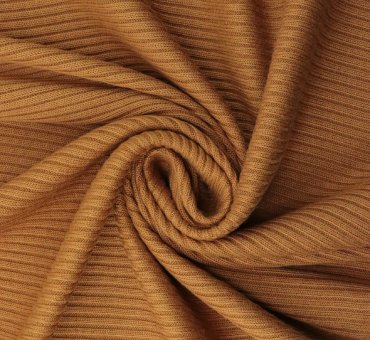
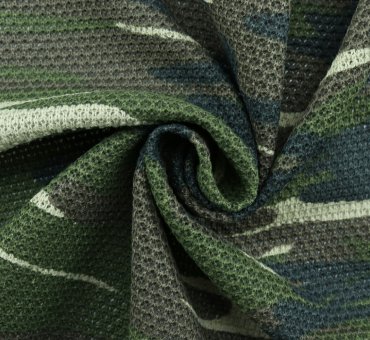
Knitted polyester fabric is made from polyester yarns that are looped together on knitting machines instead of being woven. This looped structure allows the fabric to be more stretchable, comfortable, and better in drape compared to woven fabrics. There are two main types of knitted polyester fabrics: weft knits, such as jersey, rib, and interlock, and warp knits, including tricot and raschel. Each type offers distinct properties suitable for specific end uses across fashion, activewear, and industrial applications.
The design process of knitted polyester fabric begins with selecting the appropriate polyester yarn. Designers choose filament yarns for smooth, lustrous finishes, textured yarns for a soft and cotton-like feel, microfiber yarns for sportswear requiring high performance, and recycled polyester (rPET) to create sustainable fabric options. Once the yarn is selected, attention is given to fabric properties such as GSM (grams per square meter) for thickness and weight, gauge for fineness, and stretch and recovery—which may be enhanced using spandex. Additionally, features like moisture-wicking or antibacterial finishes are considered for performance-based applications. The knitting pattern, such as single jersey, pique, mesh, or fleece-back, is chosen based on the intended final use. Designers often use CAD software to simulate and fine-tune these patterns before production.
Knitted polyester fabric is primarily produced using circular knitting machines, which create fabric in a tubular form and allow for high-speed, continuous knitting. Yarn is fed into the machine where needles form interlocking loops. The process is closely monitored to detect issues like dropped stitches or yarn breaks. These machines are calibrated based on parameters such as gauge (needles per inch), loop density, and fabric width. For more structured or shaped components like collars and cuffs, flat knitting machines are used. They offer precise control, making them suitable for tailored or shaped garments.
After knitting, the fabric undergoes various dyeing and finishing processes to achieve the desired appearance and performance. Pre-treatment involves scouring to remove natural or synthetic residues and heat setting to stabilize the fabric's dimensions. Polyester fabrics are dyed using disperse dyes, typically in jet or winch dyeing machines, with dyeing temperatures ranging between 130–135°C. The finishing stage may include brushing, sueding, or embossing to add texture, and application of special treatments like moisture management, anti-pilling, UV resistance, or antibacterial finishes. Techniques like calendering or stentering are used to improve the fabric’s surface and ensure consistent width.
After dyeing and finishing, knitted polyester fabric goes through rigorous quality control processes. Visual inspections are conducted to check for surface defects, color consistency, or fabric flaws like holes. In addition, lab tests evaluate key performance indicators such as GSM, shrinkage, tensile strength, colorfastness, stretch and recovery, and pilling resistance. Advanced textile factories may also use AI-based defect detection systems to enhance accuracy and maintain consistent quality across production batches.
Thanks to its comfort, durability, and flexibility, knitted polyester fabric is used across a wide range of industries. It’s commonly seen in sportswear, including T-shirts, leggings, and track suits, where stretch and moisture management are essential. It is also used in innerwear, lingerie, children’s and girls’ fashion, as well as in home textiles like cushion covers and bedsheets. Beyond fashion, it also finds application in industrial uses, such as filter fabrics and garment linings.